Introduction
Paper plate making machines have undergone significant transformation over the years, evolving from simple manual devices to advanced, high-tech automated systems. This evolution has been driven by the increasing demand for disposable tableware, technological advancements, and the need for more efficient, cost-effective, and eco-friendly production processes. In this article, we will explore the journey of paper plate making machines, comparing manual and automatic systems, and understanding how technological innovations have shaped the industry.
The Early Days: Manual Paper Plate Making Machines
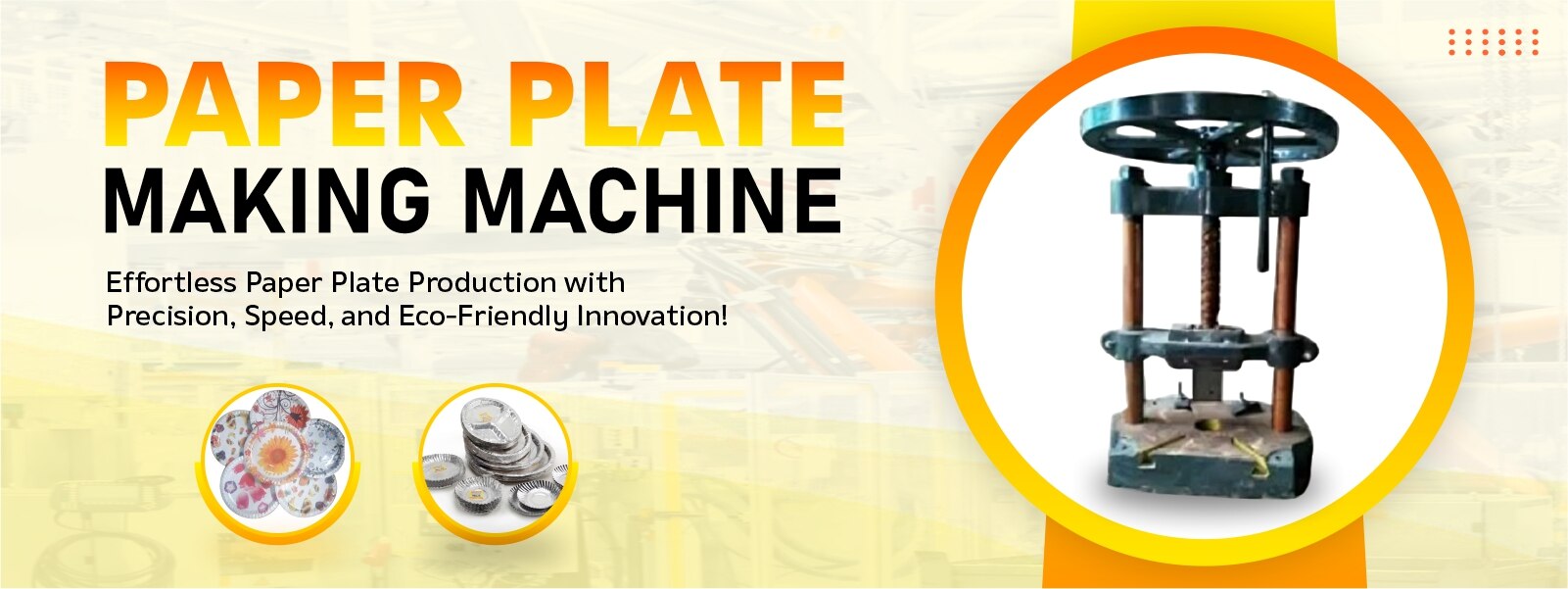
Initially, paper plates were crafted using basic manual machines. These machines required human intervention at almost every step of the process. Here are some key aspects of manual paper plate machines:
- Simple Operation – Manual machines relied on human labor to place the raw material (paper sheets) and operate the pressing mechanism.
- Low Production Capacity – These machines could produce only a limited number of plates per hour, making them inefficient for large-scale manufacturing.
- Higher Labor Costs – Since manual operation required more manpower, labor costs were relatively high.
- Limited Design Options – Manual machines offered fewer customization options in terms of shape, size, and design.
- Quality Consistency Issues – Due to human intervention, the quality and consistency of plates varied from batch to batch.
Despite these limitations, manual machines played a crucial role in the initial stages of the paper plate industry, particularly in small-scale businesses.
The Transition: Semi-Automatic Paper Plate Machines
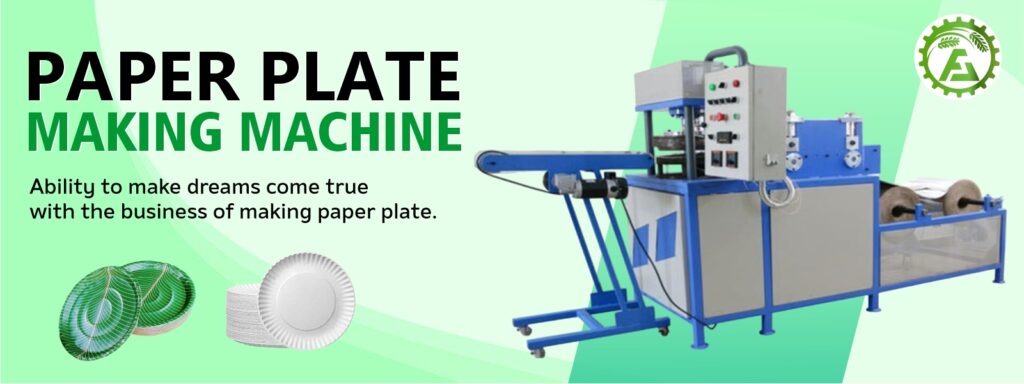
With increasing demand and technological progress, semi-automatic machines were introduced. These machines combined manual operation with mechanized components to enhance efficiency. The semi-automatic machines provided several benefits over their fully manual counterparts:
- Increased Production Speed – Semi-automatic machines could produce more plates per hour compared to manual machines.
- Reduced Human Effort – Though some human intervention was still required, the pressing and cutting mechanisms were partially automated.
- Better Consistency – The quality and uniformity of plates improved due to controlled mechanical operations.
- Customization Options – More flexible design capabilities were introduced, allowing manufacturers to create plates of various shapes and sizes.
Semi-automatic machines were a stepping stone toward full automation, helping medium-scale businesses boost their production without a significant increase in costs.
The Modern Era: Fully Automatic & High-Tech Machines
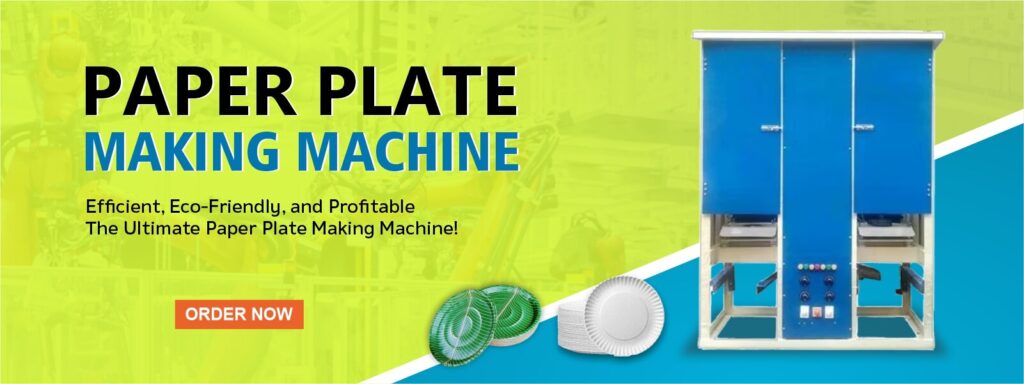
The demand for disposable plates skyrocketed with urbanization, fast food culture, and growing environmental concerns. This led to the development of fully automatic paper plate making machines, revolutionizing the industry with cutting-edge technology.
Key Features of Fully Automatic Machines
- High-Speed Production – Advanced machines can manufacture thousands of plates per hour, significantly increasing output.
- Minimal Human Intervention – Most processes, from feeding the paper to cutting and stacking, are completely automated, reducing labor dependency.
- Consistent Quality Control – Automation ensures uniformity in plate size, thickness, and design, maintaining superior product quality.
- Energy Efficiency – Modern machines are designed to consume less energy while maximizing output, reducing operational costs.
- Multi-Die Functionality – Some high-tech machines allow for multiple dies to be used simultaneously, enabling diverse product designs and sizes.
- Smart Control Systems – Equipped with digital interfaces and sensors, these machines offer real-time monitoring, error detection, and efficiency tracking.
- Eco-Friendly Materials Compatibility – Many modern machines support biodegradable materials, contributing to environmental sustainability.
Manual vs. Automatic Paper Plate Machines: A Comparative Analysis
| Feature | Manual Machines | Automatic Machines |
|---|---|---|
| Production Speed | Low | High |
| Labor Requirement | High | Low |
| Consistency & Quality | Variable | Uniform & High |
| Operational Costs | Low initial cost but high labor cost | Higher investment but low operational cost |
| Customization & Design | Limited | Multiple options |
| Scalability | Not suitable for large-scale production | Ideal for mass production |
| Energy Consumption | Manual effort required | Energy-efficient mechanisms |
The Future of Paper Plate Making Machines
As technology continues to evolve, the future of paper plate making machines looks promising. Several trends are shaping the industry:
- Artificial Intelligence & IoT Integration – AI-powered monitoring systems will optimize production efficiency and detect faults in real time.
- Eco-Friendly Innovations – Machines will increasingly support biodegradable and recyclable materials, reducing environmental impact.
- 3D Printing & Customization – Advanced printing technologies will enable unique and personalized plate designs.
- Energy-Saving Mechanisms – Future machines will be designed to operate on renewable energy sources such as solar power.
Conclusion
The journey of paper plate making machines from manual to high-tech automation showcases the remarkable progress in manufacturing efficiency, sustainability, and business scalability. While manual machines played a foundational role, modern automatic machines have revolutionized the industry, making large-scale production faster, more cost-effective, and environmentally friendly. As technology continues to advance, we can expect even more sophisticated innovations in the paper plate manufacturing sector, shaping the future of disposable tableware.