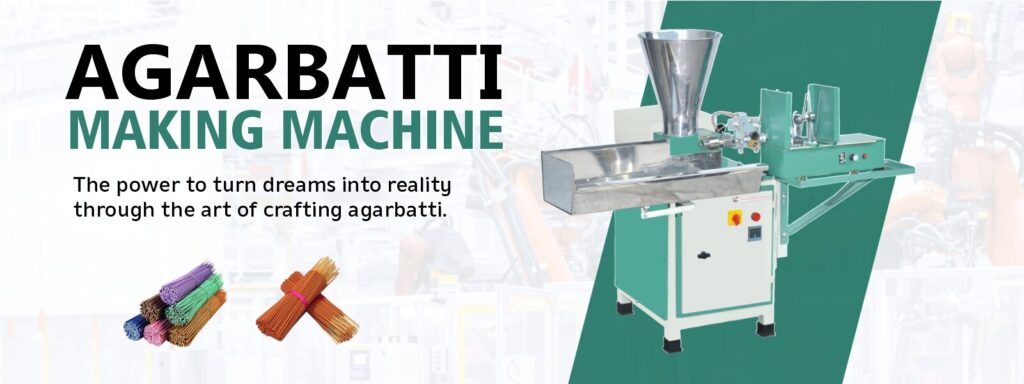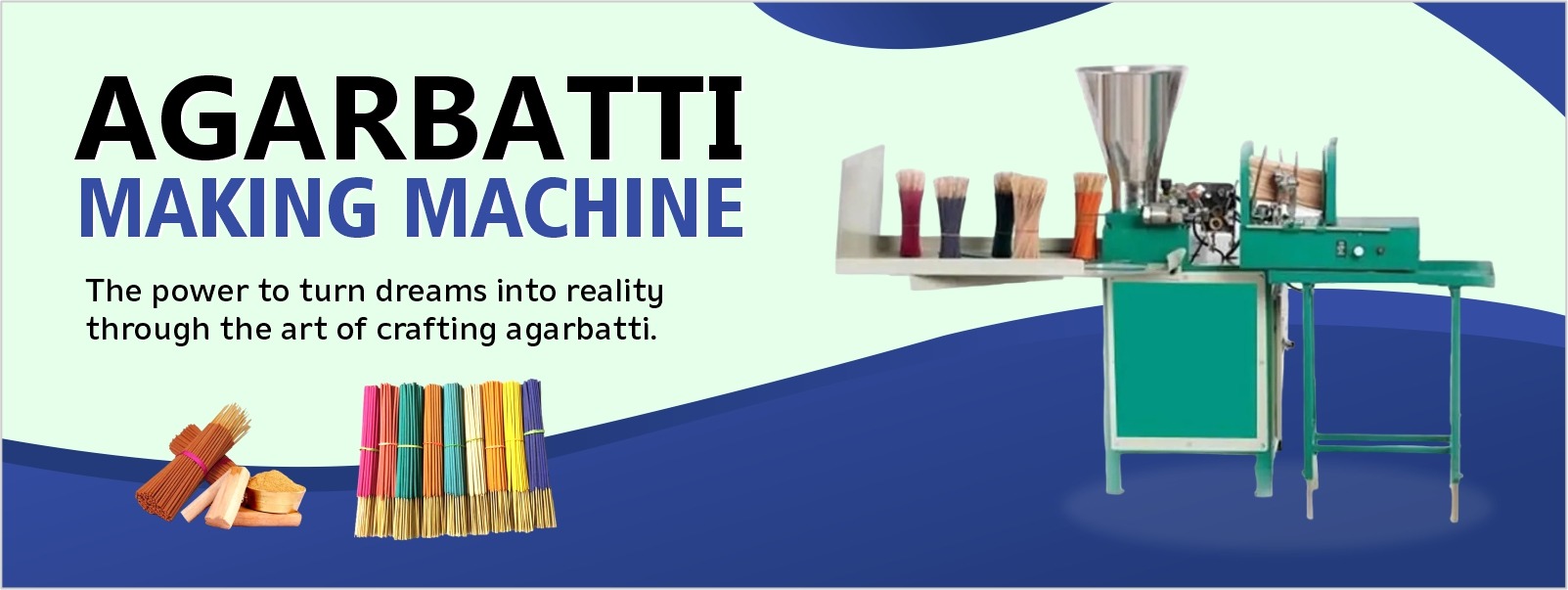
Agarbatti, or incense sticks, hold a significant place in religious rituals, meditation, and aromatherapy. The demand for agarbatti is consistently high, making it a lucrative business opportunity. If you are a beginner looking to start an agarbatti-making business, using an agarbatti making machine can streamline production and increase profitability. This guide will walk you through the essential steps, from choosing the right machine to production and marketing strategies.
1. Understanding Agarbatti Making Machines
Agarbatti making machines come in various types, each suited for different production scales and automation levels. The main types are:
- Manual Machine: Requires human effort to roll and shape agarbatti.
- Semi-Automatic Machine: Reduces manual work by automating parts of the process.
- Fully Automatic Machine: Capable of high-speed production with minimal human intervention.
Choosing the Right Machine
Factors to consider while selecting a machine include:
- Production capacity: Choose based on expected demand.
- Budget: Machines vary in cost, from ₹50,000 to ₹2,00,000.
- Power consumption: Fully automatic machines consume more electricity.
- Ease of maintenance: Opt for machines with readily available spare parts.
2. Raw Materials Required
To produce high-quality agarbatti, you need the following raw materials:
- Bamboo Sticks: The base for rolling agarbatti.
- Charcoal Powder: Helps in combustion.
- Jigat Powder (Bark Powder): Acts as a binding agent.
- Wood Powder: Enhances burning quality.
- Fragrance Oils & Essential Oils: Provide the characteristic aroma.
- Dye Colors (Optional): Used for colored agarbatti sticks.
- Water & Adhesives: For binding the mixture together.
3. Setting Up the Machine and Workspace
Location Selection
- Choose a well-ventilated area with ample space for machine setup and raw material storage.
- Ensure an electric connection to support machine operation.
Installation and Testing
- Read the manufacturer’s manual carefully.
- Install the machine on a flat surface.
- Test the machine with a small batch before full-scale production.
4. Agarbatti Manufacturing Process
Step 1: Preparing the Mixture
- Mix charcoal powder, jigat powder, and wood powder in the right proportion.
- Gradually add water to form a smooth, dough-like paste.
Step 2: Loading the Machine
- Place the bamboo sticks in the designated section of the machine.
- Feed the prepared paste into the hopper.
Step 3: Rolling and Extrusion
- The machine will roll the paste onto the bamboo sticks.
- The sticks are cut to the desired length and shaped accordingly.
Step 4: Drying the Agarbatti
- Place the freshly made agarbatti sticks on trays in a shaded, well-ventilated area.
- Allow drying for 24–48 hours to ensure proper combustion.
Step 5: Fragrance Application
- Once dried, dip the agarbatti sticks in fragrance oils.
- Allow them to dry again for a few hours.
Step 6: Packaging
- Sort and pack agarbatti in attractive, moisture-proof packaging.
- Label with branding, fragrance, and manufacturing details.
5. Cost Analysis & Profitability
Estimated Initial Investment
- Agarbatti Making Machine
- Raw Materials
- Packaging & Miscellaneous
- Total Estimated Investment
Profit Potential
- Production Cost
- Selling Price
- Estimated Monthly Profit: depending on scale and marketing efforts
6. Marketing & Selling Strategies
Local Market Penetration
- Supply to local temples, shops, and wholesalers.
- Offer bulk discounts for repeat customers.
Online Sales
- Sell on platforms like Amazon, Flipkart, and local e-commerce sites.
- Create a social media presence to attract customers.
Branding & Packaging
- Use eco-friendly packaging to attract environmentally conscious consumers.
- Create a unique brand identity with different fragrance varieties.
7. Business Expansion Strategies
- Introduce premium agarbatti (herbal, luxury fragrances).
- Expand production by investing in additional machines.
- Export to international markets for higher revenue potential.
Conclusion
Starting an agarbatti business using an agarbatti making machine is a profitable venture for beginners. By carefully selecting the right machine, managing production efficiently, and implementing strong marketing strategies, you can build a successful and sustainable business in this evergreen industry.